Tsukuba Science City Plan
Core idea
National R&D city with campus urbanism
Why it matters
Science-city planning model
Description
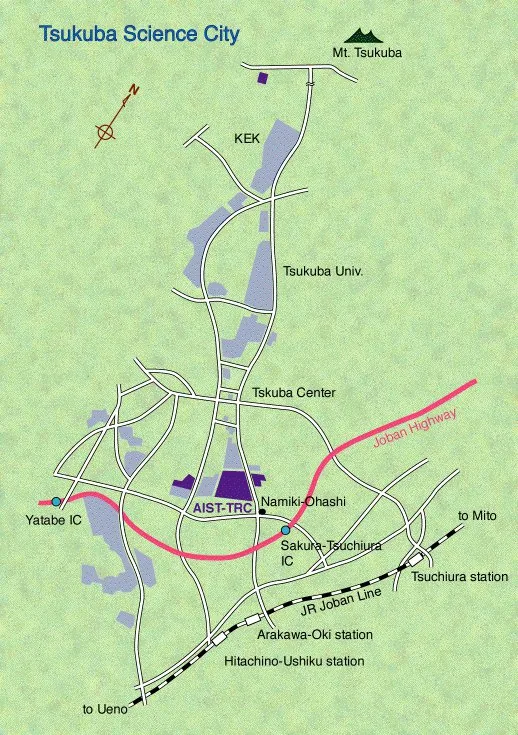
Tsukuba Science City, planned by the Japanese national government from the 1960s on farmland about sixty kilometres northeast of Tokyo, was conceived to relocate state research institutes and a new national university out of the congested capital. The plan combined a linear civic spine with low-density campus urbanism, generous green space and dispersed research estates, developed under the Japan Housing Corporation and related agencies.
Significance
Tsukuba became the internationally cited model of the state-built science city, demonstrating how a government could cluster research institutions to create a knowledge-based urban economy. It informed later technopolis programmes in Japan and science-city projects across Asia, while its early social isolation and car dependence fed lasting debates about whether innovation districts can be created by decree.
What became of it
Realised: developed through the 1970s-1980s as Japan's national R&D hub, hosting numerous government research institutes and the University of Tsukuba, and consolidated into Tsukuba City; it hosted the 1985 international science exposition.
Critique
Early assessments flagged that the planned, relatively isolated campus-style city initially struggled with social isolation and a weak innovation culture compared with its scientific infrastructure investment.
What shaped it
- The master plan (early 20th c.)
- New Towns Act (1946)
- Spaceflight and satellites (1957)
- Zoning (1884 Germany / 1916 NYC)
- The Japanese City Planning Law (1919 (revised 1968))
Plans it influenced
- Wuhan Optics Valley (1990s–)
- Songdo International Business District (2003–)
- Pangyo Techno Valley (2005–)
- Eindhoven Brainport City Vision (2016–)
- Skolkovo Innovation Center (2010–)
- Hangzhou Future Sci-Tech City (Alibaba Xixi area) (2011–)
- Seoul Digital Media City (DMC) (2002–)
- Cyberjaya Masterplan (Malaysia) (1995–)
Sources
- https://www.britannica.com/place/Tsukuba-Science-City
- https://www.intralinkgroup.com/latest/intralink-insights/october-2021/tsukuba-science-city